

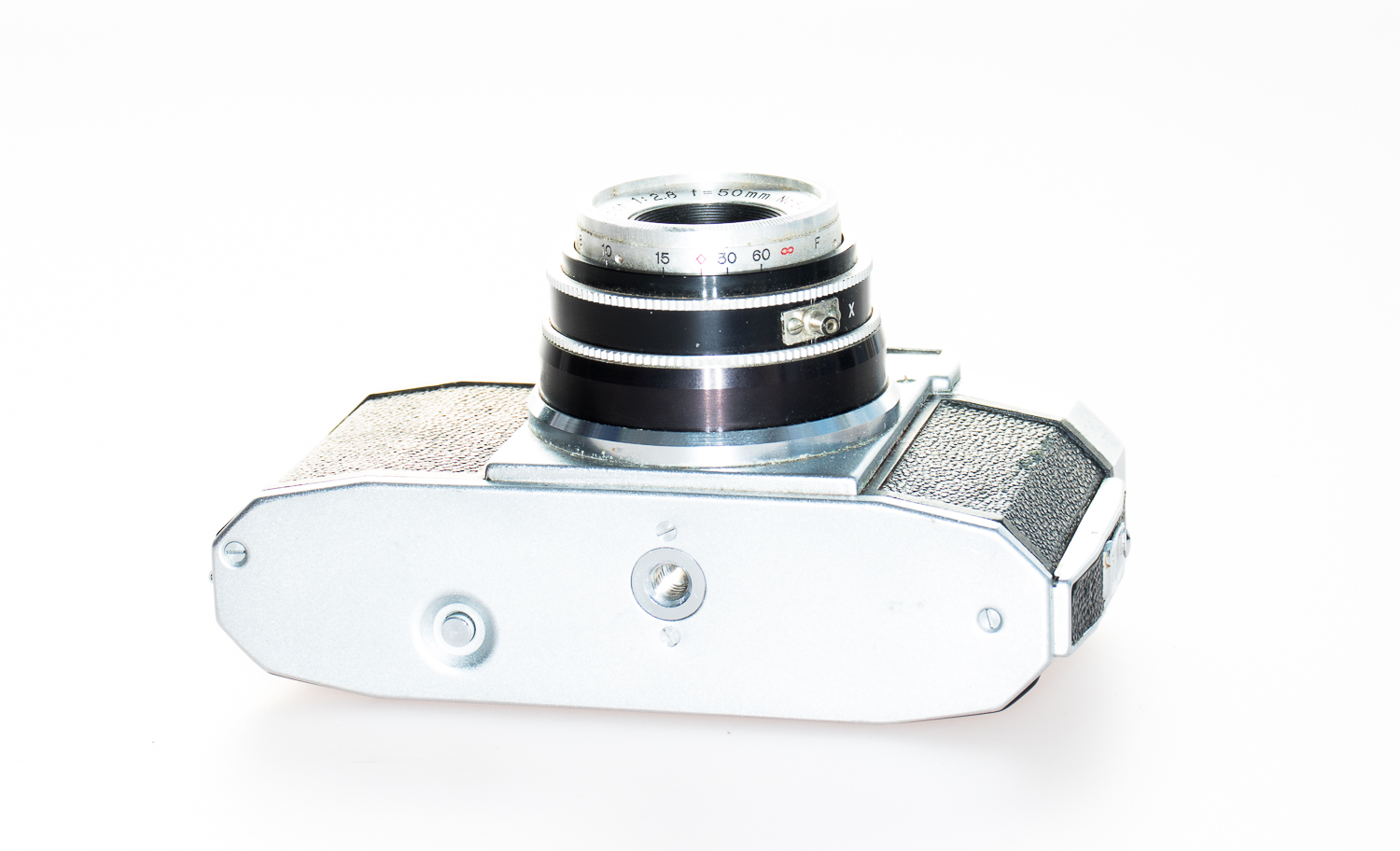
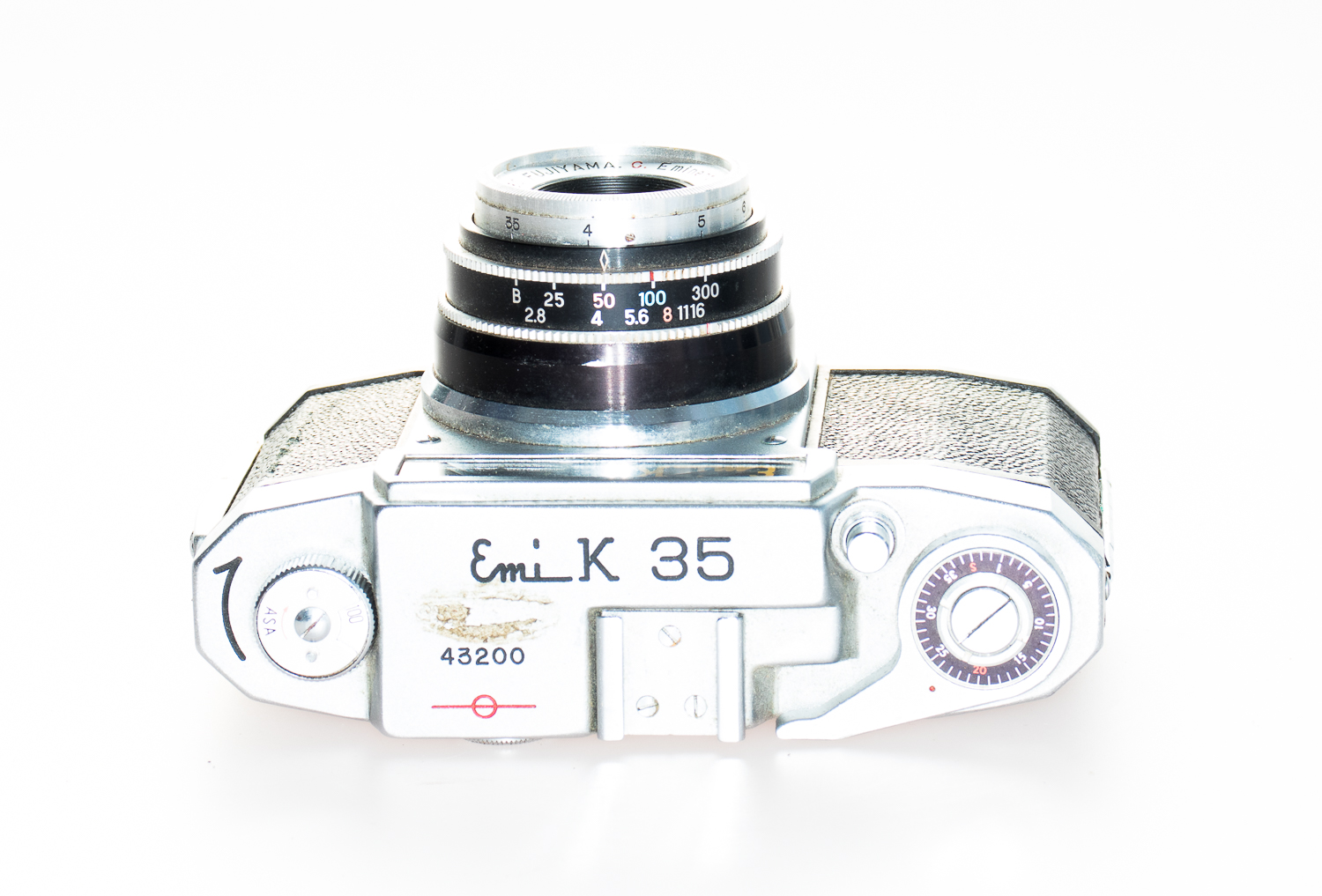
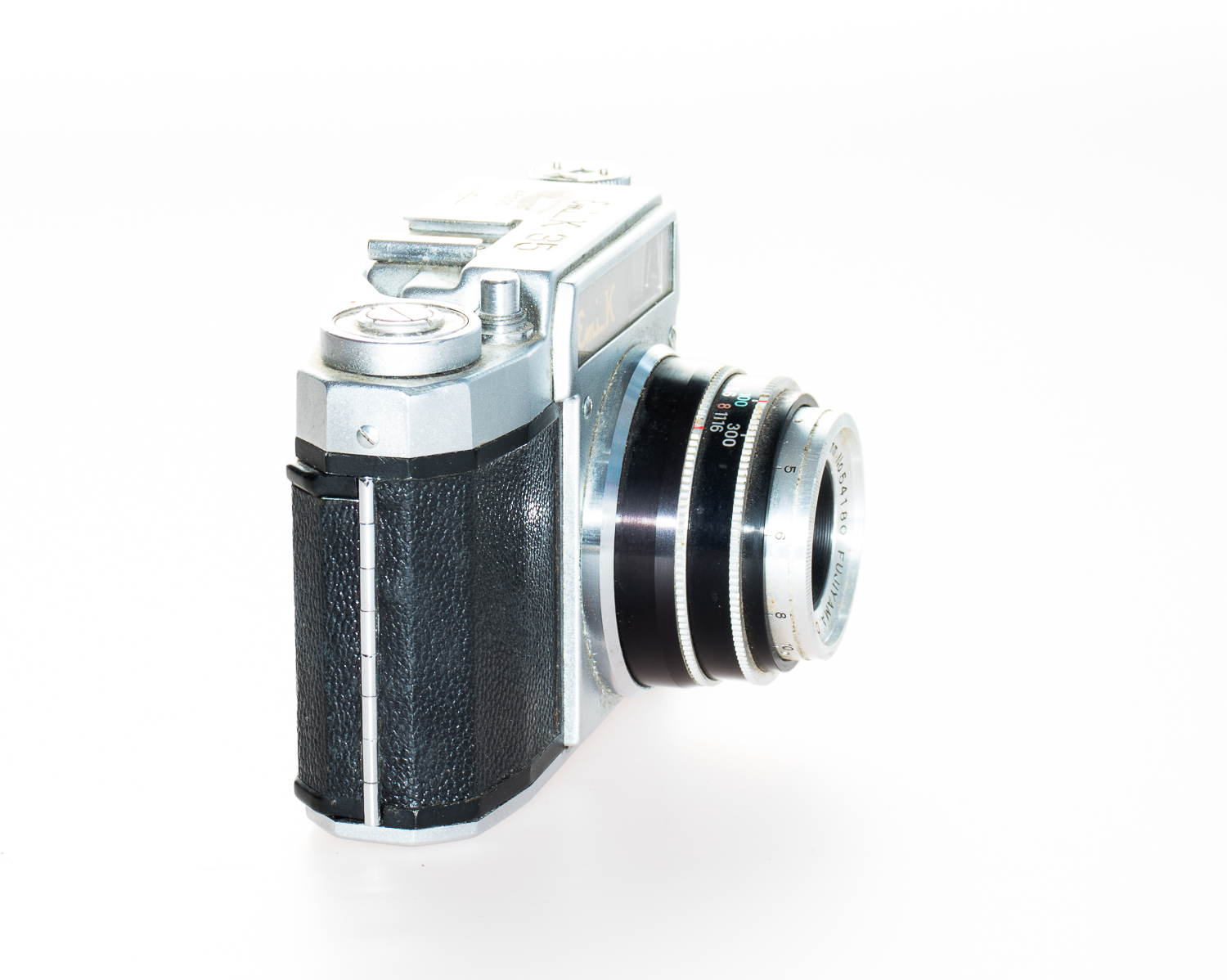
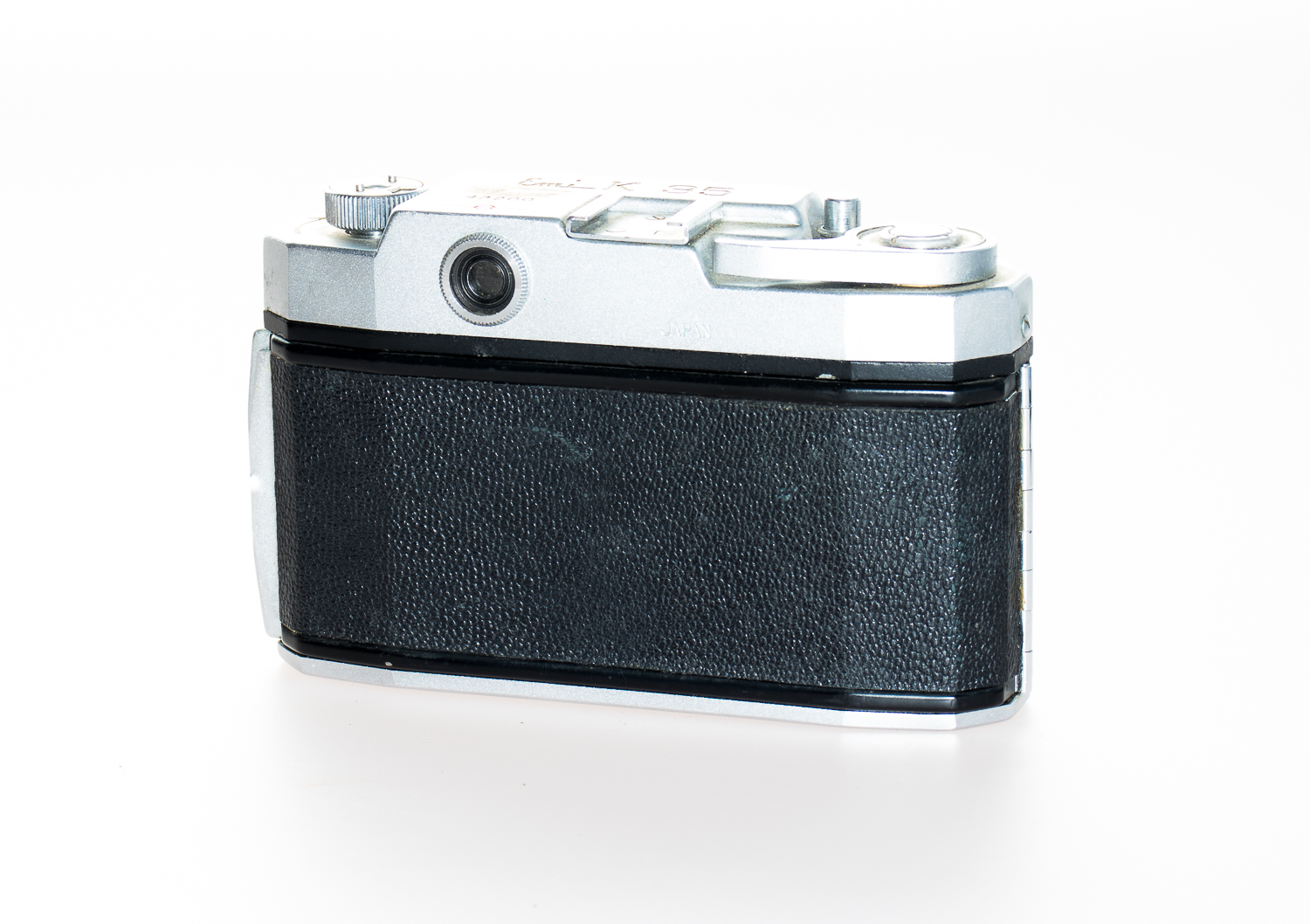
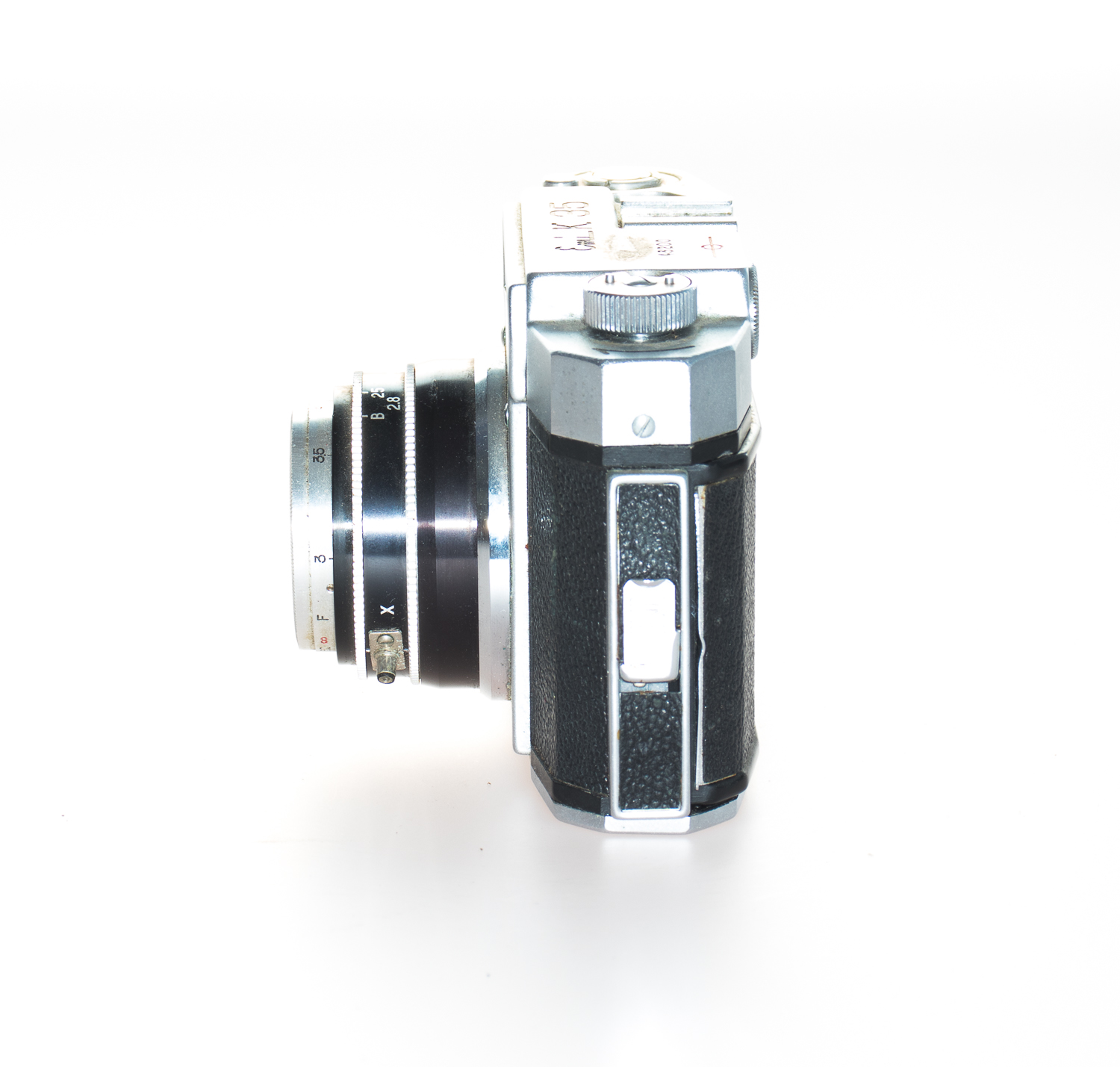
The Emi K 35 was made by the Oshiro Optical Works in Japan in 1956. It is quite an attractive and well made little camera but basic in the facilities it offers.
Emi K 35
The Emi K 35 was made by Oshiro Optical Works in Japan in 1956. It is quite an attractive and well-made little camera, but its facilities are basic.
Lens: Fujiyama Eminent Color
Focal length: 50 mm
Apertures: 2.8 to 16
Focus range: 3 feet to infinity
Lens fitting: fixed
Shutter: own make speeds: 1/25, 1/50, 1/100, 1/300
Flash: PC connector, X synch
Film size: 35 mm
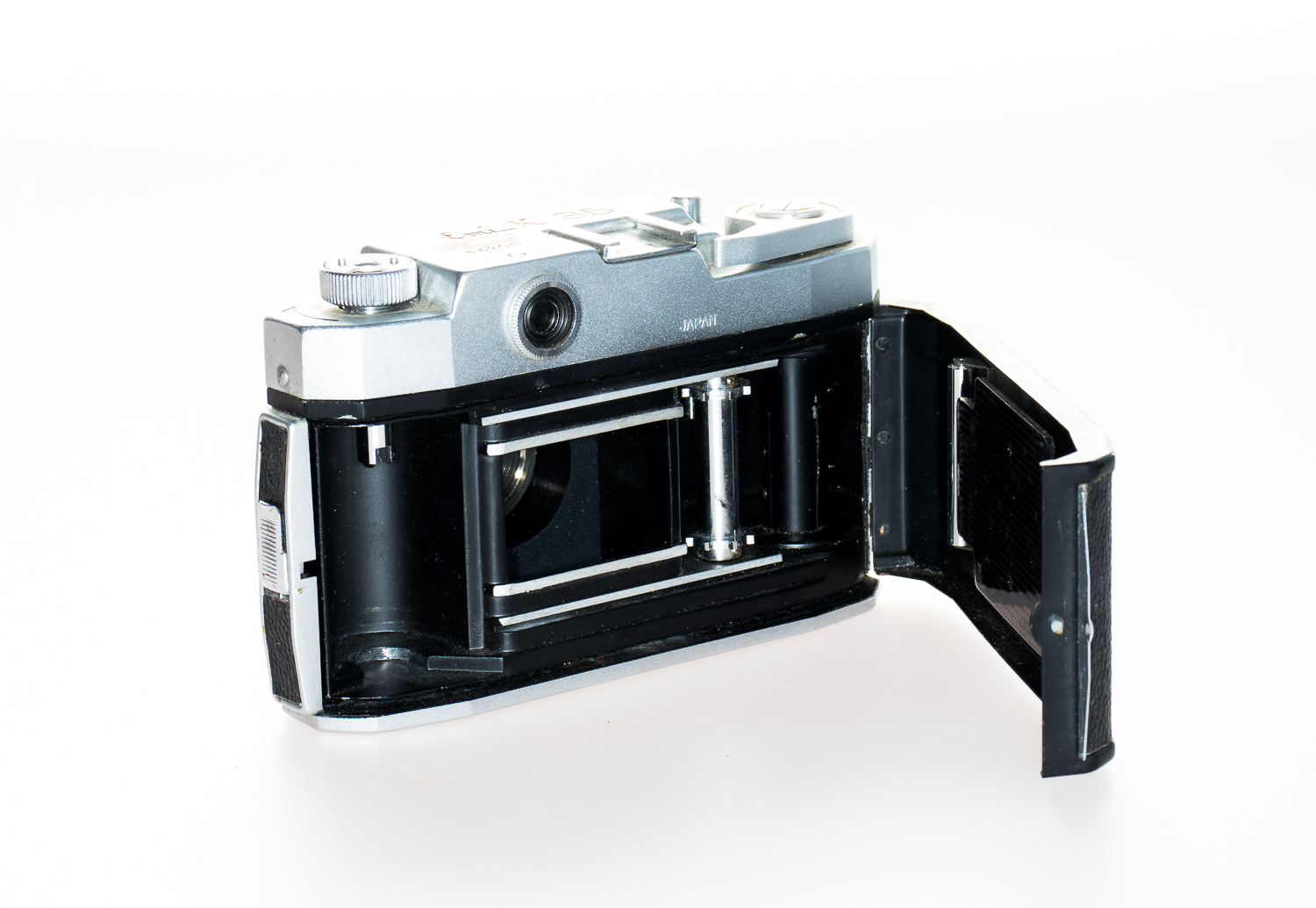
The camera is heavy, made from die-cast metal (presumably aluminium alloy), including the hinged back. It measures 125 mm by 70 mm by 80 mm. The main body is covered in black leatherette, and the top and bottom plates are satin stainless steel. The shutter release button is next to a raised part of the top plate, and with my large hands, it is a bit awkward to get my finger on it. Film advance is by a lever. The viewfinder is small but no smaller than what Voigtlander was offering simultaneously. The viewfinder has no frame lines, and the total image will be recorded on the film. On taking the camera apart to look at the broken film advance spring, I saw a square cut-out in the front of the top plate, usually masked by the ‘Emi K’ logo on the front. This suggests that a rangefinder was considered at some point. On the left of the top plate is the film rewind, a small crank (very small!) that is relatively difficult to use. This crank pulls up to release the cassette for removal. The only thing on the top plate is an accessory shoe – a ‘cold’ shoe in flash terms. A PC connector for the flash is at the bottom of the shutter housing. The lens is a Fujiyama Eminent Color lens.
A red ‘C’ on the lens bezel indicates that the lens is coated (about average for 1956). The whole shutter housing/lens assembly seems well-designed and well-made, but feels a bit plasticky compared to Prontor shutters. The shutter housing is plastic, which is not bad as long as it is used thoughtfully. The inside is as you would expect – a recess for the film cassette, machined guides, a sprocket wheel to advance the film and a fixed take-up spool. I am very much in favour of fixed take-up spools. Zeiss Ikon and Ihagee used removable spools. The camera back has the expected pressure plate (generously sized) and ‘Zeiss bumps’ in the leatherette. ‘Zeiss bumps’ are formed when the rivets holding components together react chemically with the metals used. The back is aluminium alloy, and I suspect the rWhitworthñ steel.
The camera’s base has a central tripod boss – 1/4 inch Whitworth. There are no strap lugs on this camera – the manufacturer will have expected the user to use the ‘ever-ready case that will have been supplied with the camera.


